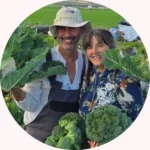

About three years ago, when the week ended at the small daycare we ran in Tel Aviv, Margalit and I would drive up to the Galilee to work the land. During the week we looked after the children. On weekends we prepared garden beds, sowed seeds and planted seedlings. When there was enough to pick, we took our vegetables back to the city and sold them at markets and to people in the neighbourhood where we lived and worked. For two years, that was the rhythm of our lives.
Table of Contents
From the Kitchen and Studio to the Soil
I came to farming through the kitchen. For 14 years I ran a cooking school and taught people how to cook as part of a healthy way of life. When we made a salad, I wanted us to know something about the cucumber we were about to eat. Who grew it? What soil did it grow in? How was it cared for? I asked myself the same questions when I bought vegetables for my family, and often I couldn’t answer them. I wanted to know where our food came from, and I thought I could start growing it myself.
Margalit came with a dream of her own. She had created and run her own fashion label in New York, and when I met her, I discovered how much she loved sowing seeds, planting and seeing what would grow. She dreamed of a farm with animals and a place where she could share what she had learned in life. During those weekends in the Galilee, our dreams began to take shape. I would prepare another bed, Margalit would plant it, and by the next visit we couldn’t wait to see what had changed. We planted our olive trees around that time, too. When we walk past them now, we can see how much they’ve grown in those three years.
Building Pri Ahavati in the Lower Galilee
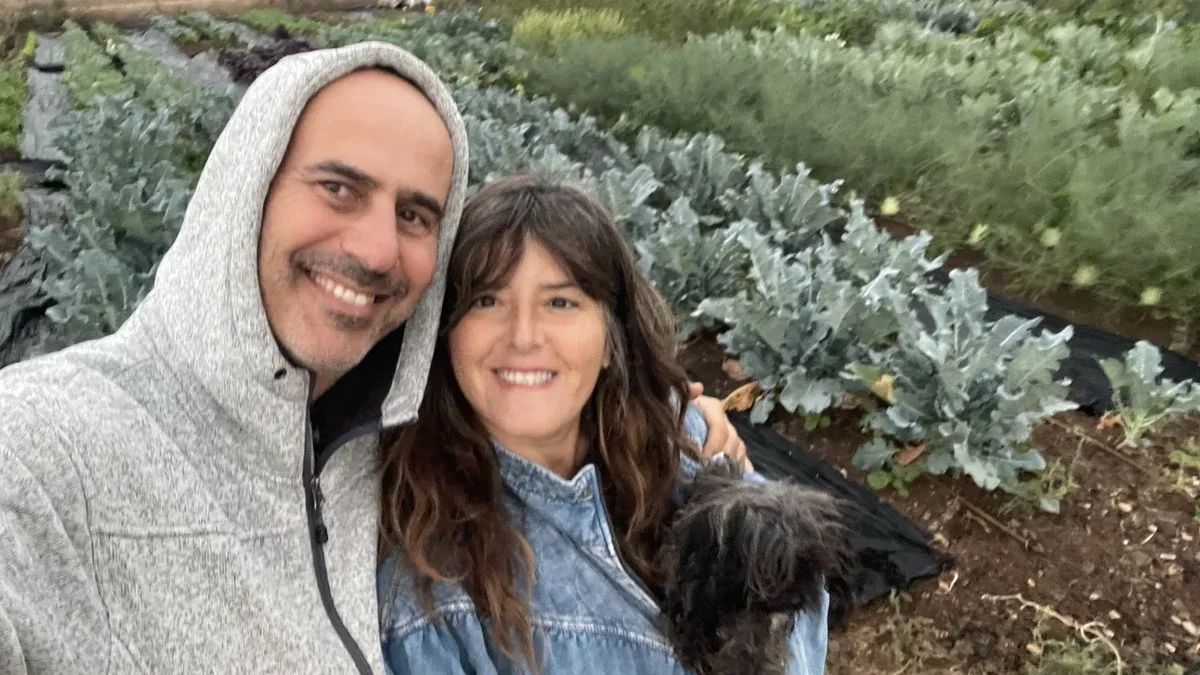
In September 2025, after two years of driving back and forth, we left Tel Aviv and moved to the land in the Lower Galilee. We called our place “Pri Ahavati,” Hebrew for ‘the fruit of my love’. Suddenly we could step outside in the morning and see what had happened in a bed we’d planted the day before. We could give the place our full attention, grow more and begin welcoming people who wanted to share a little of our life here.
Everything that grows here passes through Margalit’s hands and heart. From sowing to harvest, she notices how each seedling is settling in and what it needs. I love watching her work. She has the patience to stay a moment longer with a single plant, even when a whole bed is waiting for her. When I see her like that, I feel she belongs to the life of this place, and that something of its nature comes through in her. I used to stand in front of a cooking class and ask who had grown the food on the table. These days, the answer is very close to my heart.
Biodynamic Farming and What We Grow
Biodynamic farming is the approach that felt most right to us. We learned much of what we now practise from Nitzan Shpilman, and we’re grateful for his knowledge and guidance along the way. Our work starts before we plant, with compost and biodynamic preparations to care for the soil. We want to build healthy soil in which plants can grow well. That’s how we grow our vegetables, and we don’t spray them for pests.
Season by season, our garden beds grew to cover about 1,500 square metres. Quite a few of those beds are given over to strawberries. We also grow artichokes and asparagus. We sow carrots and radishes directly in the ground, alongside fennel, celery, leeks and potatoes. For a salad, we can pick cos lettuce and red Salanova, and add rocket, baby greens, Japanese mustard leaves or mint.
We grow several kinds of spinach, as well as chard, broccoli, cauliflower, and green and red cabbages. In season there are cucumbers, eggplants, and sweet and hot peppers. This November, we’re still picking tomatoes while the winter vegetables are already growing in the beds. Some days I walk into the kitchen with tomatoes, fennel and Japanese mustard leaves, and make a meal that began just a short walk from the table.
Animals, Volunteers, & Farm-to-Table Workshops
In the meantime, the farm Margalit dreamed of has filled with life. We have goats and hens, and we collect eggs from the coop. Three volunteers work alongside us, some of whom came through Margalit’s connections. She has long wanted to be there for girls and young women going through things she recognises from her own life.
Here, there’s room for that in the ordinary course of the day. Sometimes a conversation starts while hands are busy planting. Sometimes it carries on around the table long after everyone has finished eating. Margalit listens, shares when it feels right and gives her support with a great deal of love.
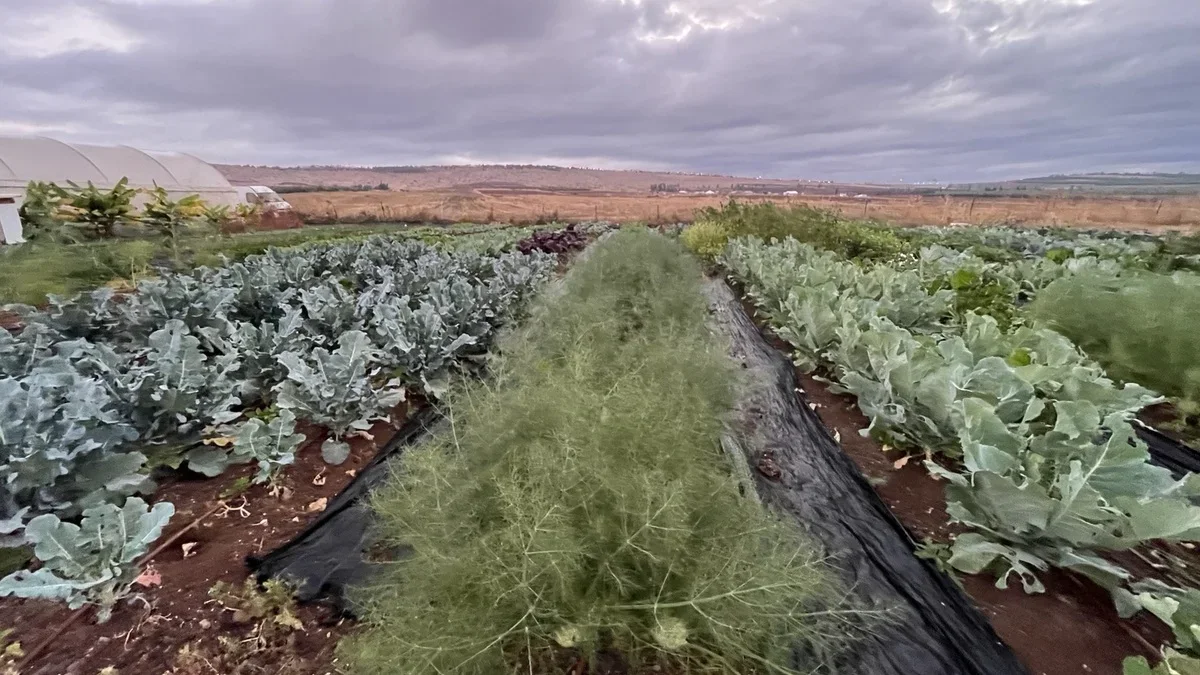
Since moving here, we’ve discovered how much we enjoy welcoming people. There’s a quiet here that’s hard to convey in a photograph. You can sit among the beds, look around and stay a little longer simply because it feels good. We invite people to get to know the place at that pace and find out what it feels like to grow some of their own food.
We go out to pick vegetables together, bring back what we’ve chosen and cook a meal. There’s something special in that for me. I bring all those years of teaching cookery with me, but now I can begin the lesson beside the plant itself. What I once talked about in the classroom now happens in front of me, with our hands in the work — mine, Margalit’s and those of the people who come to cook with us.
Scaling Up with “Grow With Us”
People have been able to order our vegetables through our online shop for more than two years. These days, most of our customers live nearby, and their orders help us decide what to plant next. When a family comes back for the lettuce they liked, I want there to be some ready to pick for them the following week. I also think about people in anthroposophical communities around Israel who are familiar with biodynamics and look for vegetables grown this way. I want more people in Israel to be able to buy biodynamic produce as part of their regular shop, at a price that works for them.
It takes more than extra land to make that possible. We need to plan what to sow and when, so the lettuces don’t all mature in the same week and there’s still a good range to pick when one crop comes to the end of its season. There’s land we can expand into, and we have the possibility of working with an experienced grower. We want to start with one plot, plan the crops for a whole season and grow at a pace we can sustain.
That’s why we started Grow With Us, our programme for people who want to support the farm’s next step. Joining helps pay for work that starts well before the harvest: planning the crops, preparing the beds, bringing in compost, laying irrigation lines and paying an experienced grower to work with us. It also pays for my time managing the work and coordinating what we sow, what we pick and what people order. We want to earn a living from this work and make more biodynamic vegetables available at prices people can afford. If you’d like to help make that happen, come and see what’s already growing here.
Three years ago, we would finish a weekend in the Galilee and head back to Tel Aviv with whatever we’d managed to grow. Now people come to us, meet Margalit among the beds and help pick what we’ll cook for lunch. And perhaps someone will go home after a visit and sow a few radishes in a pot. I know that moment from the kitchen, when someone discovers they can make something they’d always thought was too complicated. It makes me happy to think that the same thing can happen with their hands in the soil.