
Aglaonema, or Chinese evergreen, is a popular low-maintenance, easy to care indoor flowering plant that naturally grows in the rainforests of Thailand, Malaysia, and Indonesia. In rainforests, these plants grow beneath the leaf canopy, which means they in wild they receive indirect sunlight.
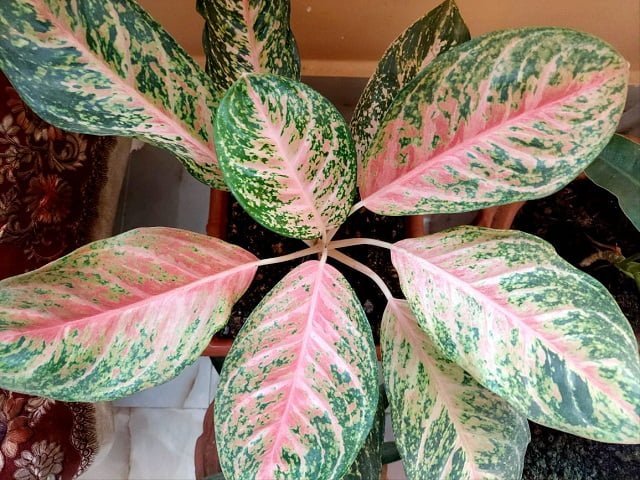
However, gardeners and plant enthusiasts love this plant mainly because of the beauty of its leaves. Leaf color varies from silver, yellow, and red to green, with beautiful markings on them.
According to NASA, this famous houseplant can filter air toxins such as formaldehyde and benzene. Moreover, caring for this indoor plant is also easy. You can keep it in your bedroom, office, or even study room. Here is a complete guide to aglaonema care.
Table of Contents
Aglaonema Care Guide

How much sunlight does my aglaonema need?
Aglaonema thrives in indirect sunlight. Never place this plant under direct sunlight. Moreover, depending on the variety, its light requirements may vary. Although it can survive in shade, bright indirect sunlight promotes better growth. Green colored aglaonema can perform well in shade but red to pink varieties need bright indirect sunlight.
What’s the best climate for my aglaonema?
You can grow Aglaonema in USDA Plant Hardiness Zones 10 and 11. A tropical to subtropical climate is best for growing this plant. Spring to summer is considered the best season for repotting. During winter, try to protect the plant from cold winds.
At temperatures below 15°C, the growth of this plant becomes restricted.
How often should I water my aglaonema?
The Aglaonema plant loves moist soil but hates soggy conditions. Overwatering can definitely harm your plant. This wonderful tropical plant also loves humidity. Hence, if the atmospheric moisture is below 50%, you should mist the plant frequently. Aglaonema requires moderate watering. Apply water only when the top layer of the soil becomes dry. This practice will help promote better growth of the plant.
What’s the best soil for my aglaonema?
Aglaonema plants love well-drained, loamy soil. Slightly acidic soil is ideal for growing Aglaonema, with a pH range of 5.6 to 6.5. Avoid growing this plant in heavy clayey soil. Prepare an ideal potting mix using 40% garden soil + 20% river sand + 20% cocopeat + 20% bulky organic manure. You can use vermicompost as the organic manure.
When should I fertilize my aglaonema?
Aglaonema plants are not heavy feeders, so you do not need to apply too much fertilizer. Moreover, use nitrogen-rich fertilizers to promote good vegetative growth. You can add two handfuls of any bulky organic manure once every 60 to 90 days.
You may also apply liquid fertilizers once every 45 days. For this purpose, you can use tea leaf extract. I do not recommend using banana peel or onion peel fertilizers, as they are rich in phosphorus and potassium. Avoid fertilizing during winter season.
When should I repot my aglaonema?
Aglaonema is a slow-growing plant and usually takes 2 to 3 years before it needs repotting. However, you can repot the plant earlier if the roots start binding in the soil or begin to emerge from the drainage holes.
Small to medium-sized pots are suitable for growing Aglaonema plants. Pots measuring 8 to 10 inches in size are ideal. However, make sure the pot has 3 to 4 drainage holes at the bottom. Gardeners often love to grow them in decorative pots.
How to control pests & diseases of Aglaonema?
Although this beautiful houseplant is not easily affected by pests and diseases, a few pests such as slugs, aphids, and mealybugs can occasionally harm your plant. To deal with snails and slugs, you can spray a saltwater solution directly on the pests. However, do not use too much salt, as it can increase the salinity of the soil.
I have already published articles on aphids and mealybugs, which you can check out.
Is aglaonema plant poisonous?
Aglaonema is a moderately toxic plant, which means you should be cautious when keeping it in your space. Keep your loved ones, especially pets and children, away from touching the plant unnecessarily. Although it does not cause harm through contact, it can be harmful if ingested.
F.A.Q. On Aglaonema
Is aglaonema a lucky plant?
Definitely it is a lucky plant. It not only add positive vibes in the environment but it also filters out toxins from the air. In today’s world when pollution is one of the biggest problem in cities, air purifying plants such as aglaonema are blessings from the nature.
Is aglaonema indoor plant?
We can call aglaonema an indoor plant as it requires filtered sunlight to grow in natural habitat. Green shade variety of aglaonema can even survive under low light condition. But calling a plant an indoor plant doesn’t means that it can perform well without any source of light.
Author’s Note
I guess you are now clear on caring for your aglaonema plant. If you have any idea, suggestions, or query then you can comment below. You can also connect with Agriculture Review on Facebook, Instagram, and Pinterest.



Green Aglonima ke patte pile kyo ho rhe hai ….
Overwatering or direct sunlight can cause yellowing of leaves, check whether water is draining properly or not, if plant in under direct sunlight, then bring it under indirect sunlight. It will help to reduce yellowing of leaves in your Aglaonema plant.
I hope this will help!