The Maya civilization that existed from around 2600 B.C. to the 16th century in Mesoamerica (Mexico, Guatemala, Belize, Honduras, and El Salvador) is known for its art, architecture, mathematics, calendar, astronomical system, and farming practices. The roots of companion planting can be found in the Three Sisters Farming System of the Maya civilization.
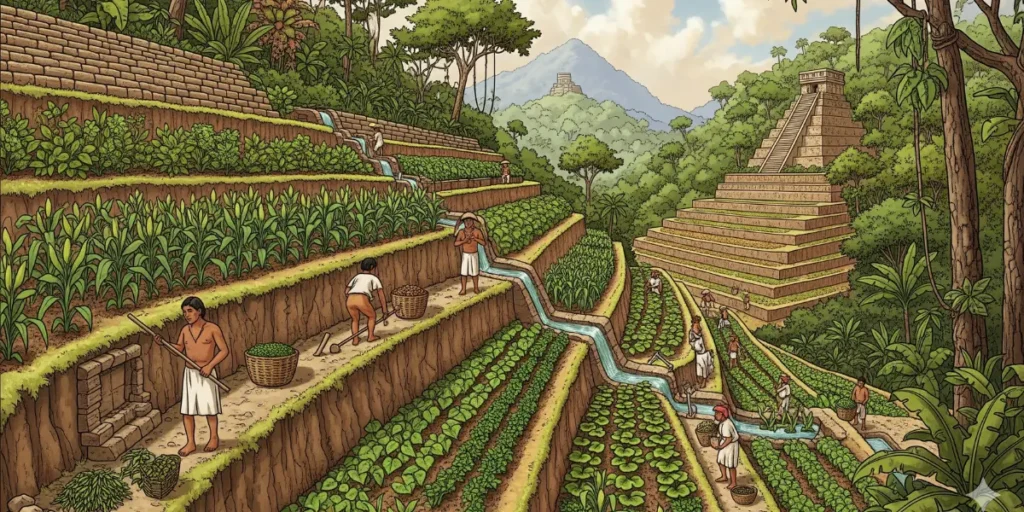
As Mayas lived in close proximity with hilly regions, they also developed terracing on hillsides and chinampas around wetlands to maximize yields while maintaining ecological balance. They also practiced crop rotation, managed forest gardens, and utilized the nitrogen-fixing properties of beans to enhance soil fertility
Maya Farming Methods


- Three Sisters Farming (Companion Planting): In this system maize, beans, and squash are cultivated together on the same plot. Beans fix nitrogen in the soil, maize provides support for climbing beans, and squash covers the ground, thus helping in weed control, preventing soil erosion, and conserving moisture.
- Chinampas: Mayas elevated plots of soil and organic matter built in wetlands or shallow lakes to cultivate crops. Following this system helped in getting multiple harvests, enhancing soil fertility, reducing pests, and supporting biodiversity.
- Terrace Farming: In hilly regions, Mayas created terraces to prevent soil erosion and maximize arable land. It helped in soil conservation, water retention, and cultivation of slopes.
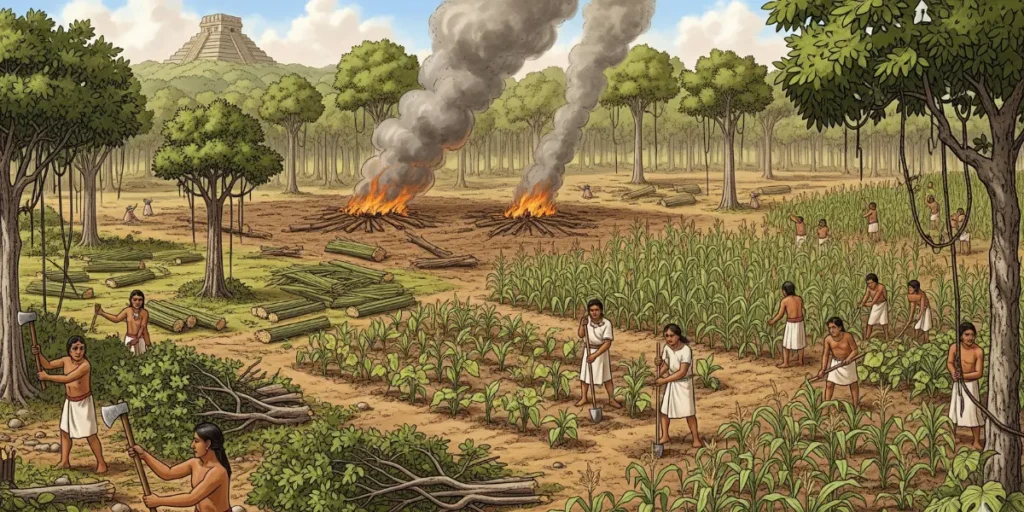
- Shifting Cultivation: Also known as the ‘Swidden’ or ‘Slash and Burn’ farming system, it was also practiced by the people of the Maya civilization. In this system they used to burn vegetation and mix ash with the soil. Cultivate crops on the land for a few seasons, then move to a new plot. It helped in boosting the fertility of the soil, clearing forests for easy movements, etc.
Major Crops of the Maya Civilization: People of the Maya civilization cultivated Maize, Beans, Squash, Chili peppers, Tomatoes, Cacao, Amaranth, Sweet potatoes, Avocados, and Manioc (cassava).
If you have any queries, ideas or suggestions, then please comment below. You can also connect with Agriculture Review on Facebook, Instagram, Koo and WhatsApp Messenger.