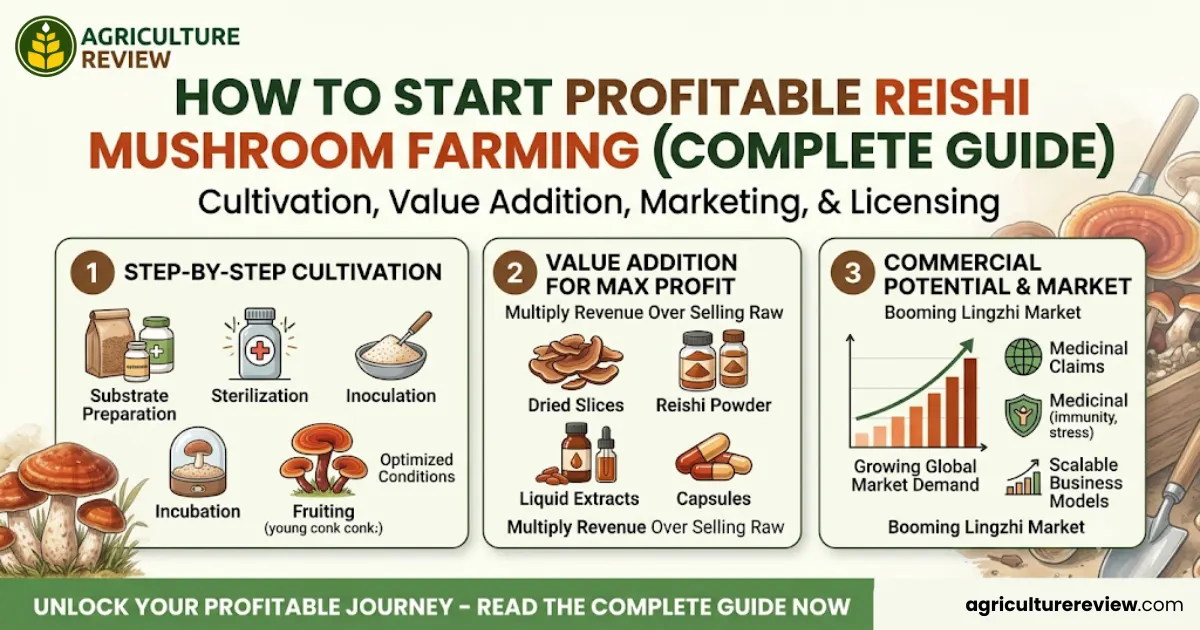

The global Reishi market is projected to cross $16 Billion by 2033. Cultivated using cheap, locally available substrates like sawdust, wood logs, and agricultural byproducts but is highly prized and profitable due to its use in pharmacology and alternative medicine for its rich portfolio of active triterpenoids and polysaccharides.
Table of Contents
What Makes Reishi Farming So Profitable?
Low production cost, highly priced medicinal value (anticancer, antiHIV, antiheart attack, cholesterol lowering as well as anti-angiogenic, Hepato- and nephrotoprotective, hypoglycemic anti-diabetes, antioxidants etc.), and ability to be processed into high-margin, shelf-stable products makes Reishi mushroom farming profitable.
A kilogram of Reishi mushroom (Ganoderma lucidum) often selling between ₹4,000 and ₹5,000 ($45–$60) or more depending on quality ensures profitability. It is also a component of circular economy. Farm waste acts as substrate and provides extra income to the farmer. Moreover unlike seasonal crops, farmers or agripreneurs store dried form of Reishi to sell when there is a high demand in the market.
Step-by-Step Cultivation Process
Reishi mushroom (Ganoderma lucidum) is pharmacologically prized & grown exclusively for medicinal use, which requires strict organic and highly hygienic conditions . Depending on your investment capital and climate, production is divided into two highly profitable commercial methods.
Method 1: Indoor Sawdust Bags (Polyhouse)
Best for agripreneurs seeking rapid, environmentally controlled harvests .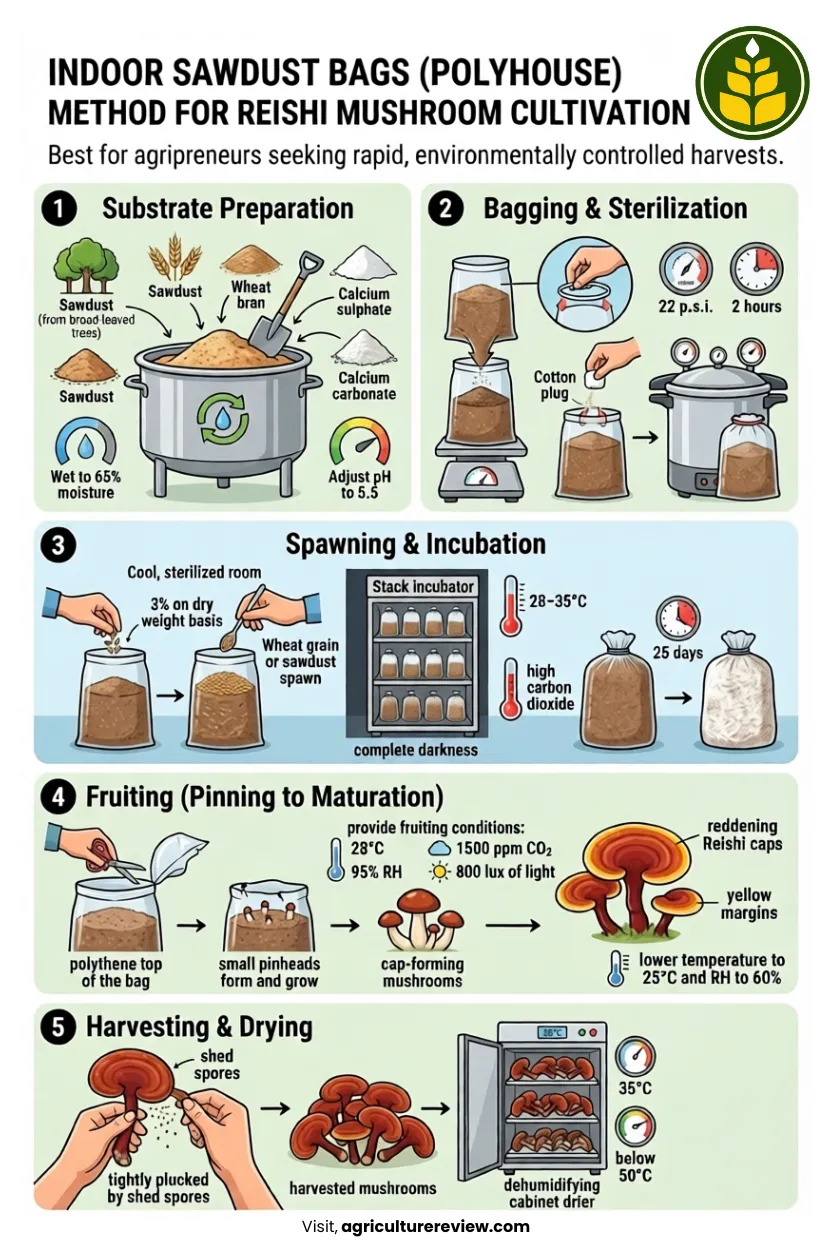
- 1. Substrate Preparation Use sawdust from broad-leaved trees (mango, poplar, coconut, sheesham) amended with 20% wheat bran. Wet the mixture to 65% moisture and add calcium sulphate and calcium carbonate to adjust to a pH of 5.5.
- 2. Bagging & Sterilization Fill polypropylene bags with 700g dry weight (2.1 kg wet) of the mixed substrate. Plug the mouth with cotton using a plastic ring, then sterilize in an autoclave at 22 p.s.i. for 2 hours.
- 3. Spawning & Incubation After cooling, inoculate with wheat grain or sawdust spawn at 3% on a dry weight basis. Incubate in complete darkness with high carbon dioxide at 28-35°C for about 25 days until the bags are completely white.
- 4. Fruiting (Pinning to Maturation) Cut the polythene top and provide fruiting conditions: 28°C, 95% RH, 1500 ppm CO2, and 800 lux of light. Once the cap forms (indicated by yellow margins), lower the temperature to 25°C and RH to 60% to encourage thickening and reddening.
- 5. Harvesting & Drying Harvest by tight plucking once spores are shed on the reddish-brown cap. Dry the harvested mushrooms at low temperatures (below 50°C), preferably at 35°C in a dehumidifying cabinet drier.
Method 2: Outdoor Log Culture
Best for premium, high-quality yields that mimic natural growth habitats.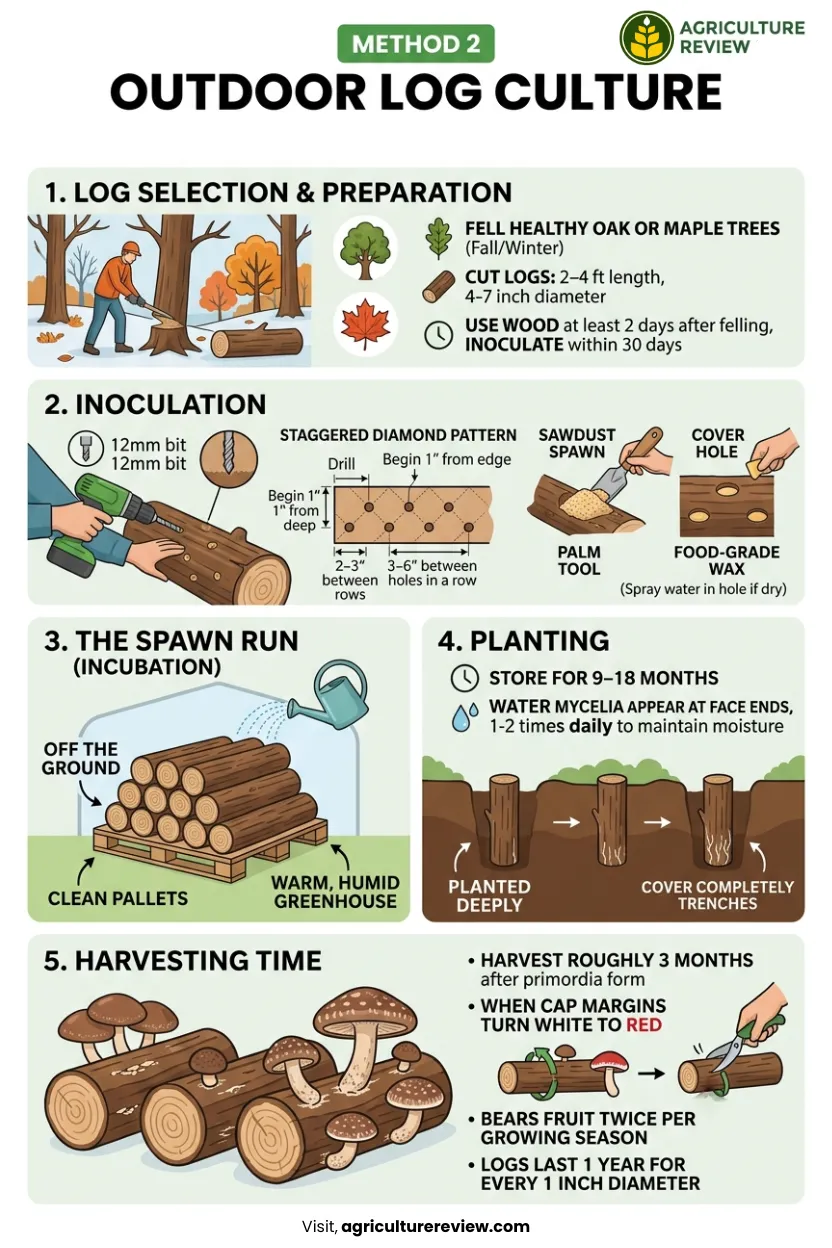
- 1. Log Selection & Preparation Fell healthy, straight-limbed oak or maple trees in fall or winter. Cut into 2 to 4-foot lengths with a 4-7 inch diameter. Use the wood at least two days after felling and inoculate within 30 days.
- 2. Inoculation Drill holes 1 inch deep using a 12 mm bit in a staggered diamond pattern. Begin drilling 1 inch from the edge of the log. Leave 2–3 inches between rows and 3–6 inches between holes in a row. (Spray water in hole if moisture content is not ideal). Insert sawdust spawn using a palm tool and cover each hole entirely with food-grade wax to prevent bacterial or fungal contamination.
- 3. The Spawn Run (Incubation) Store logs off the ground on clean pallets in a warm, humid greenhouse for 9 to 18 months. Water them once or twice daily to maintain adequate moisture content.
- 4. Planting Once mycelia appear at the face ends of the logs, plant them deeply in greenhouse trenches, covering them completely with a couple of inches of soil.
- 5. Harvesting Time Harvest by twisting or cutting the stem base roughly three months after primordia form (when cap margins turn from white to red). Logs typically bear fruit twice per growing season and last one year for every 1 inch in log diameter.
Indoor Environmental Requirement
Precise climate adjustments helps to get the shape and commercial viability of indoor Reishi. Save this quick-reference table for managing your grow room.
| विकास चरण | तापमान | Relative Humidity (RH) | CO2 Management | प्रकाश |
|---|---|---|---|---|
| इन्क्यूबेशन | 28 – 35°C | Ambient | High (Closed room) | Darkness |
| Pinning Initiation | 28°C | 95% | 1500 ppm | 800 lux |
| Cap Formation | 28°C | 80% | 1000 ppm (Fresh air) | 800 lux |
| Maturation | 25°C | 60% | Ambient / High Airflow | 800 lux |
Value Addition: To Make Reishi Mushroom Profitable
Unlike standard culinary mushrooms, Reishi cannot be sold as a fresh food crop because its texture is corky and hard, and its taste is incredibly bitter. To unlock its massive profitability, farmers and agripreneurs must target the herbal medicine and nutraceutical sectors by processing the harvest.
Post-Harvest Drying & Storage
Because Reishi has a very high dry matter content about 450g of dry product from every 1kg of fresh mushrooms (45%), proper dehydration is the most critical first step for long-term storage.
- After harvesting, wash the mushrooms with water [cite: 1].
- Dry them at low temperatures (below 45°C to 50°C).
- For optimal results, dry them at 35°C in a dehumidifying cabinet drier, though freeze-drying is considered the best method.
- For premium shelf-life and marketability, pack the dried mushrooms in Nitrogen (N2) flushed packaging.
Profitable End-Products of Reishi Mushroom for Agripreneurs
Manufacturers of food supplements and herbal medicines can trade and process Reishi into several highly profitable forms:
Capsules & Tablets
Pulverized, dried Reishi fruiting bodies can be formulated into daily supplement capsules or pressed into tablets for the emerging health-conscious market.
Liquid Extracts
By extracting the medicinal compounds from the woody mushroom, agripreneurs can create high-margin liquid tinctures and extracts.
Premium Dried Reishi
Even without advanced processing facilities, properly dried and N2-flushed whole Reishi can be traded directly to wholesale herbal medicine manufacturers.
Licenses & Certifications
Because Reishi mushroom is exclusively for medicinal and therapeutic use and not consumed as day to day food, it requires specific documentation to establish trust and legal compliance in the market. Farmers should ensure that their operation is strictly organic and hygienic.
- FSSAI Registration / License Mandatory for Indian businesses. If you are processing Reishi into powders or extracts, apply under the Nutraceutical or Proprietary Food categories.
- Organic Certification (NPOP/USDA) Because consumers take Reishi for health, chemical-free certification is a major selling point. Seasonal farmers and industrialists alike must adhere to organic growing methods.
- GMP (Good Manufacturing Practices) Required if you plan to manufacture capsules, tablets, or liquid extracts on-site.
- Phytosanitary Certificate Required by customs authorities if you plan to export dried Reishi fruiting bodies to international buyers.
Marketing and Selling Your Harvest
Reishi is completely unpalatable as a fresh food crop due to its bitter taste and hard, cork-like texture. Therefore, finding the right market within the herbal medicine and food supplement sectors is the key to profitability. You have two primary business models:
🤝 B2B (Wholesale)
Sell to Manufacturers: Sell your properly dried, raw Reishi directly to established manufacturers of herbal medicines and food supplements.
Pros: Requires less marketing budget. Buyers purchase in bulk volume. Manufacturers handle the complexities of processing the raw material into capsules, liquid extracts, or tablets [cite: 1, 3].
🛒 D2C (Retail & Brand)
Create Your Own Brand: Process the Reishi yourself into high-value products like tinctures, powders, or supplements and sell directly to consumers at online platforms such as Amazon, Flipkart, Blinkit, etc.
Pros: Significantly higher profit margins. You control the pricing and build long-term brand equity in the booming wellness space. Requires strong branding and e-commerce investment.
Frequently Asked Questions (FAQ)
How long does it take to grow Reishi mushrooms?
The timeline depends heavily on the cultivation method. For indoor sawdust bag cultivation, one complete crop cycle takes about four months. If you are using the outdoor log culture method, the initial spawn run alone takes between 9 to 18 months before planting and fruiting can occur.
What is the yield of Reishi per kg of substrate?
Using the indoor sawdust bag method, farmers can achieve a 25% Biological Efficiency, yielding approximately 250 grams of fresh Reishi mushrooms from 1 kg of dry substrate.
Why is Reishi dried before selling?
Reishi is hard, woody, and intensely bitter, that makes it unsuitable for fresh culinary use. Furthermore, it has a very high dry matter content—yielding about 450 grams of dry product from every 1 kg of fresh mushrooms. Drying stabilizes the medicinal compounds for long-term storage and processing.
Can I use toxic chemicals for pest control?
No. Because Reishi is intended exclusively to be used as a medicine, it must be grown organically. Utmost hygienic conditions must be maintained in the growing rooms to prevent diseases and pests, as no toxic chemicals can be used.