Throwing out egg shells without using them depreciates a vital source of calcium. As an egg shell contains twice the amount of calcium a person needs a day, it is considered as the richest source of calcium of natural origin. Egg shells have been traditionally and widely used in medicine, beauty science and food production for decades.
In spite of that, there is a lack of new solutions that profoundly study mineral elements and beneficial components contained in egg shells for further usage as a product. This points to the fact that egg shells after proper treatment can be incorporated into various food products and fortify the calcium contents.
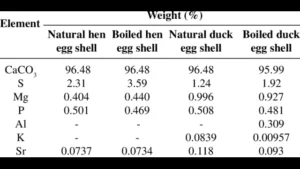
It was established that egg shells consists of Ca (72.6% – 85.7%), Mg (2.7% – 4.5%), Si (0.3% – 0.6%), P (7.0% – 18.1%), S (0.5% – 2.0%), K (0.4% – 0.9%), I (2.6% – 3.0%), respectively. The reverse titration method examination has demonstrated that the calcium carbonate (CaCO3) content in egg shells is 91% – 92.5%, and pH is 8.41 – 8.75.
Do eggshells actually increase the amount of calcium in our soil?
You may have witnessed your parents or grandparents manually smashing eggshells and adding them to the soil. It turns out that this old-fashioned method is as effective as doing nothing at all. As is well known, the most abundant and readily accessible source of calcium carbonate—a substance that is considered to be a suitable liming material—is eggshells.
As a result, it helps to raise the pH of soil. But if the calcium in the shells were to spontaneously break down and help our crops, it would take months or even years because it is bound in place by strong chemical connections. What’s the other option now?
Alternatively, it can be ground into a fine powder. Eggshells are a major waste among the poultry raised in many homes. By using them, we can help manage garbage and prevent the growth of pests and flies that would otherwise result from their disposal. Composting is one method egg shells can be utilized.
However, the twist also appears here. They require a certain amount of preparation. First, de-membrane them after letting them air dry or sundry for one to two days. The shells can also be roasted until they take on a tan hue. The procedure facilitates fine grinding. They are added to the compost material after being crushed in a standard mixer grinder. This accelerates the rate of decomposition.
Another method of using eggshell powder is to mix it with a vinegar solution (1:10 ratio) and let it sit for about 7-10 days in a cool, dark location. During this process, CO2 bubbles are released, and the endpoint is reached when no more bubbles are visible. This mixture can serve as a foliar spray for our plants.
Additionally, research has indicated that simply adding eggshell powder can enhance the availability of calcium for plants to some degree. Another growing concern is the potential transmission of salmonella bacteria to humans through eggshells if they are used as fertilizers. However, the higher temperatures achieved during roasting, along with the heat from composting, effectively eliminate these bacteria, alleviating concerns about salmonella infection.
Calcium is essential for plant health, playing a vital role in cell wall structure, root development, and overall plant growth. It strengthens cell walls, improves root growth, enhances fruit quality, and increases resistance to diseases. Eggshells provide a effective and sustainable eco-friendly solution to increase the calcium content of the soil. There is need for proper research for utilizing eggshells as an effective fertilizer for promoting plant growth.
References
1. Kim C.S. Chang , Joseph M. McGinn , Eric Weinhert, Jr. , Sherri A. Miller , David M. Ikeda , and Michael W. DuPonte. (2013). Natural Farming: Water-Soluble Calcium. Sustainable Agriculture .
2. DOI:10.15680/IJIRSET.2016.0503183
3. DOI:10.4236/msce.2024.123003