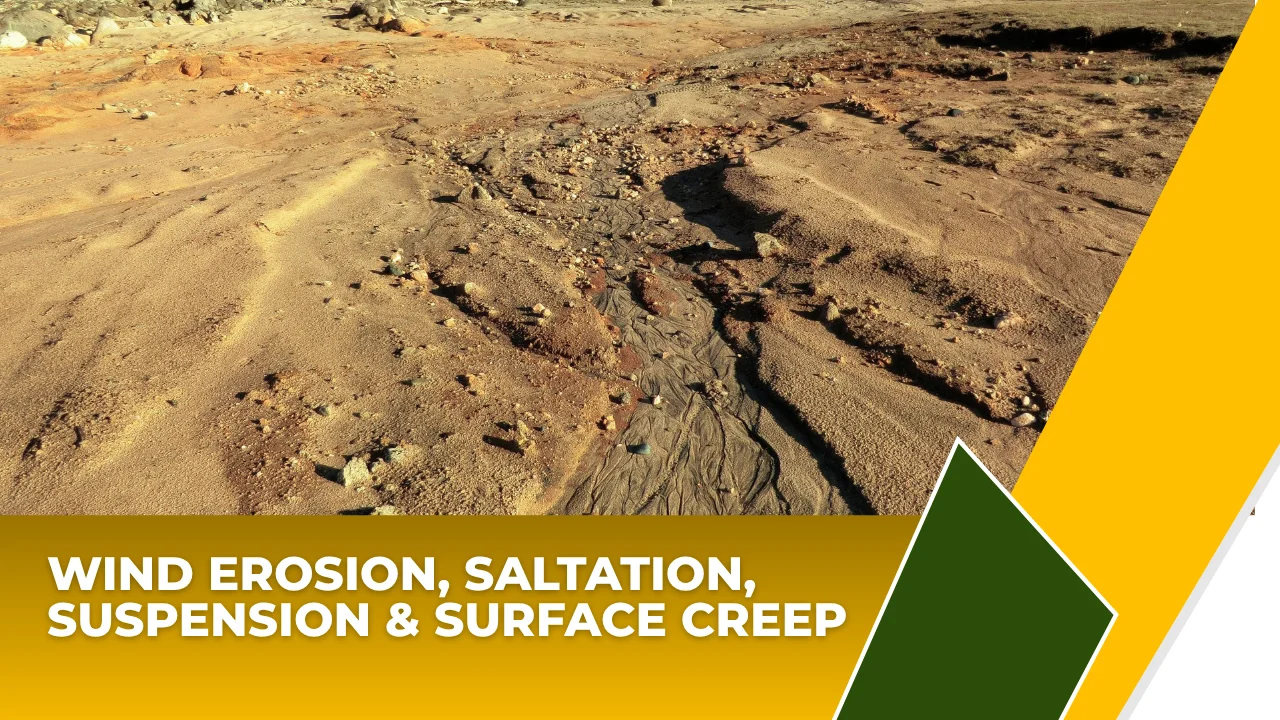

Erosion of soil by the action of wind is known as wind erosion. It is commonly observed in arid and semi-arid regions and is a dry weather phenomenon stimulated by soil moisture deficiency.
Table of Contents
Conditions For Wind Erosion
Wind erosion occur if these conditions are met:
- Insufficient Ground Cover: Less than 50% of the surface covered by non erodable elements (stubble, pasture residues, gravel, very coarse sand).
- Loose, dry soil at the surface.
- Strong wind to begin the saltation process. The wind velocity that causes sand movement is about 28 kph.
Around 33 M ha land in India is affected by wind erosion.
What Is Saltation?
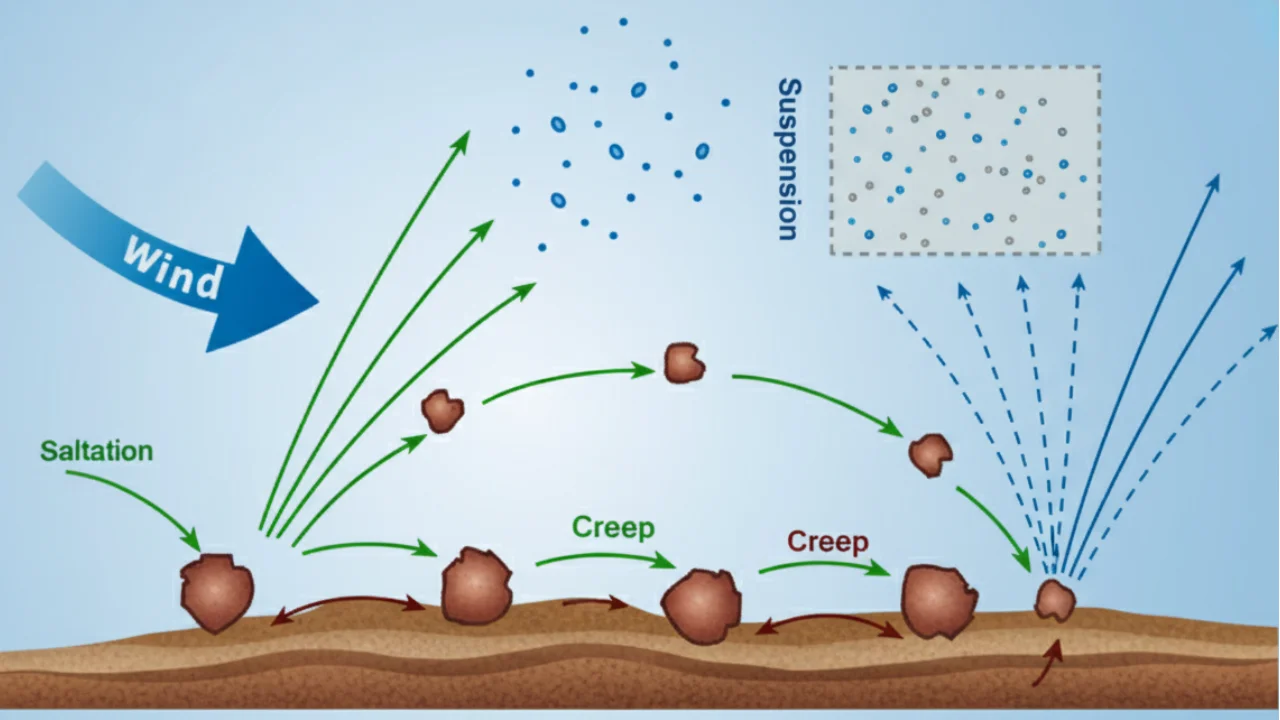
Saltation is the movement of soil particles by short series of bounces along the ground surface due to the pressure of wind on soil particles and their collision with other particles. Some grains rise only a short distance, others leap 30 cm or more, depending directly on the initial velocity of rise from the ground.
Particles less than 0.5 mm in diameter are usually moved by saltation. Saltation may account for 50 to 70% of total movement.
What Is Suspension?
Movement of fine dust particles, smaller than 0.1 mm diameter by floating in the air is known as suspension. Wind velocity more than 3 kph are capable of lifting slit and very fine sand particles to heights greater than 3 to 4.5 km. Suspnsion account for less than 15% of the total movement.
What Is Surface Creep?
Rolling and sliding of soil particles along ground surface due to impact of particles descending and hitting during saltation is called Surface Creep. It causes and abrasion of soil surface leading to breakdown of nonerodable soil aggregates due to impact of moving particles.
Coarse particles larger than 0.5 to 2.0 mm diameter are moved by surface creep. This process may account for 5 to 25% of the total movement.
Factors Affecting Wind Erosion
Major factors that affect the amount of erosion from a given field due to action of wind are:
- Soil Clodiness: Soil clods resist wind erosion. Coarsed textured sandy loams, loamy sands and sands are more susceptible to wind erosion than loams, silt loams, clay loams and silty clay loams.
- Surface Roughness: A smooth soil surface is more erodable by wind than rough surface because of being less effecting in slowing the wind velocity near the ground. The rate of soil blow under a wind force varies inversly with the roughness of the surface. Optimum roughness for wind erosion is 5 to 12.5 cm.
- Wind and Soil Moisture: Wind speed of about 12 Kph is necessary to initiate soil movement. Wind speed of 8 to 10 mps can carry 490 M t of soil per hectare on a 100 m front. Wind erosion can only occur when the soil surface is dry or only slightly moist, because surface tension holds the soil particles together when wet.
- Vegetative Cover: Living or dead vegetative cover protects the soil surface from eroding action of the wind by reducing wind speed and preventing direct wind force from reaching erodable soil particles.
- Organic Matter: It reduces wind erosion by increasing soil cohesion and creating a barrier on the soil surface. Organic matter binds soil particle together into stabble aggregates which resist eroding action of the wind.
- Topography: Level land is more liable to wind erosion than rolling land as wind encounters less resistance. However, wind erosion on knolls and ridges is more as wind presses against such areas instead of flowing parallel to the surface.
If you have any queries, ideas or suggestions, then please comment below. You can also connect with Agriculture Review on Facebook, Instagram, Koo and WhatsApp Messenger.