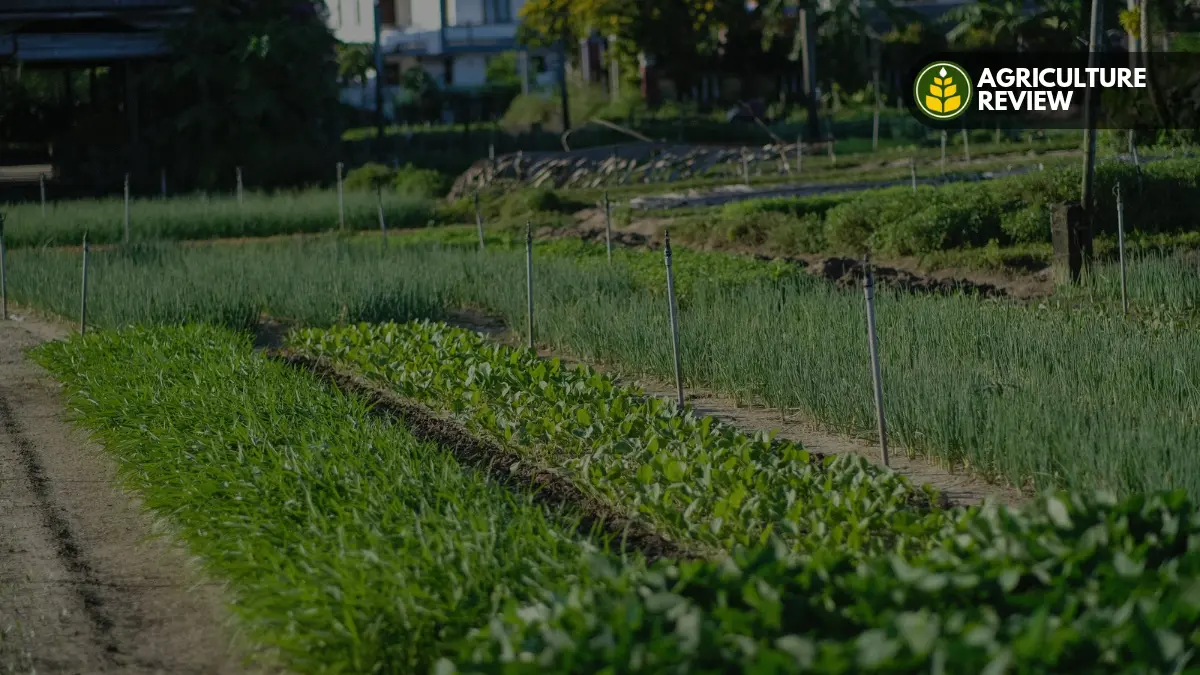

Natural farming is a method of farming that is chemical-free, follows traditional farming methods, and relies on biological inputs and local resources like farmyard manure, seeds, animal waste, etc. that works in harmony with natural biodiversity and ecological processes rather than using synthetic fertilizers, chemical pesticides, or heavy mechanical tillage.
Benefits of Natural Farming
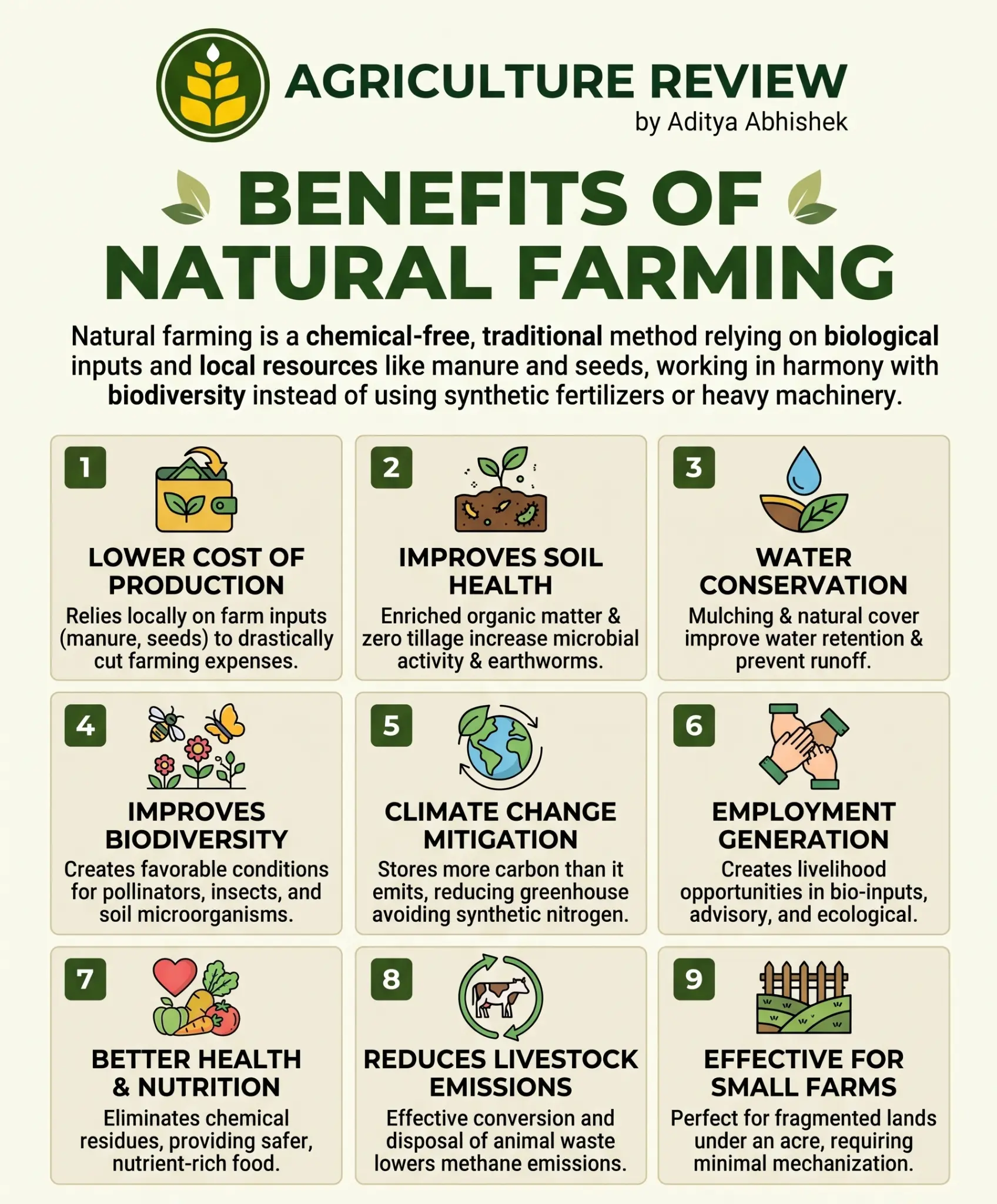
- Lower Cost of Production: Farmers rely locally on farm inputs such as animal waste for preparing bio-fertilizers और bio-pesticides, local seeds, and minimal to no mechanization that help to cut down farming expenses drastically.
- Improves Soil Health: According to PIB, due to increased use of organic matter, green manuring, cover cropping, and reduced to zero tillage, soil microbial activity increases; hence, beneficial microbes and earthworms help in improving soil fertility and health.
- Water Conservation: Minimum tillage, cover cropping, mulching, organic manure, etc. improve water retention in the soil and prevent soil water evaporation, and surface runoff thus playing a vital role in water conservation.
- Improves Biodiversity: Natural farming is known to support local biodiversity. It creates favourable conditions for a wide variety of species, including pollinators, beneficial insects, and soil microorganisms.
- Climate Change Mitigation: This system absorbs and stores more carbon than it emits, thus helping reverse agricultural emissions. It also reduces greenhouse gas emissions by avoiding use of synthetic nitrogen and urea.
- Employment Generation: It creates new livelihood opportunities across farming, advisory services, technology, and ecological management. Local farmers could produce bio-fertilizers and bio-pesticides and sell them locally or give training to other farmers who want to switch to a natural farming system.
- Better Health & Nutrition: Eliminating the use of chemical fertilizers and pesticides helps to reduce chemical residues in food and water and food chains, offering safer, higher-nutrition produce for consumers. Food grown in a natural farming system is often richer in essential nutrients.
- Reduces Livestock Carbon Emission: Due to effective conversion of animal waste into biofertilizers and biopesticides and scientific disposal, methane and other greenhouse gas emissions reduce.
- Effective for Small Farms: Farmers with farmland areas less than an acre can effectively plan and practice natural farming without mechanization. In developing countries where there is a problem of small, fragmented farm lands, practicing natural farming can be profitable and effective.
In a world challenged by global warming, climate change, and food security concerns, natural farming can become a ray of light, guiding us toward a regenerative agricultural revolution that heals our soils, nourishes our communities, and sustains generations to come.